

Standardization and Craftsmanship Adherence in the Development Process of Rubber Products
Release date:2026-05-06
For the development of every rubber product, the process is extremely complex. It requires precise control at every link, as well as the formulation and strict implementation of practical and effective standards. Now, from a first-person perspective, I will take you to explore the essence of Zhengcun Development System.
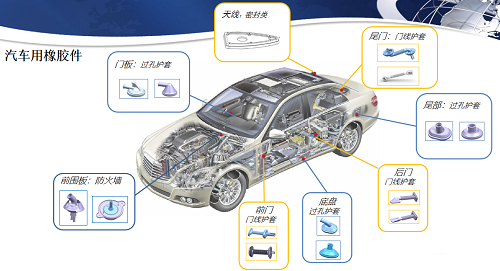
During my tenure at my previous company, I was fully involved in the process implementation and new product development of automotive rubber pipelines and sealing parts. I gained an in-depth understanding of the automotive parts industry’s characteristics of fast pace, high requirements and strict delivery commitments, and also observed common pain points prevailing in the development processes of many enterprises in the industry. The new product development of most companies is result-oriented, with process implementation tending to become a mere formality. In the project approval phase, feasibility review is not thorough enough. The business department often forwards customer demands directly to the design team without prior matching of craftsmanship, cost and production capacity. In the design phase, focus is only placed on meeting the requirements of customer drawings, while insufficient consideration is given to the adaptability of molding processes and mass production stability, relying entirely on trial and error modification during mold testing. In mold trial and pilot production stages, problem closed-loop efficiency is low. The mold, process and quality departments work in isolation without a unified person in charge of defect rectification. Minor defects such as tiny air bubbles or slight flash may require 3 to 4 repeated mold trials to be completely resolved. Worse still, some enterprises have no standardized control over development milestones. When delivery schedules are tight, reviews are skipped and pilot production is simplified to rush into mass production. This ultimately leads to mass non-conformity and customer complaints, slowing down the overall progress instead.
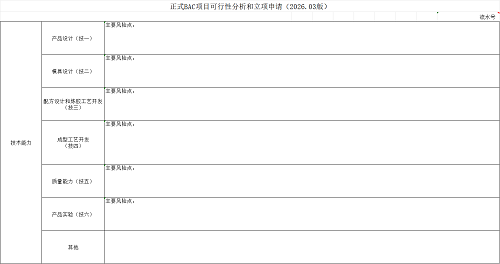
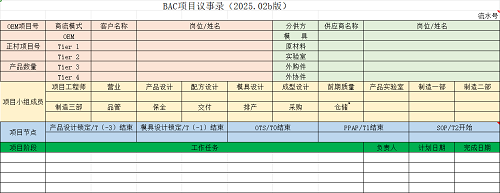
The core highlight of Zhengcun’s development process lies in pre-risk control, full-chain collaboration, and starting with the end in mind. Unlike the industry norm of prioritizing mold trials over design, Zhengcun moves risk control forward to the project approval and design phases. In the project approval stage, demands are not transmitted unilaterally by the business department. Instead, a joint review is conducted by multiple departments including business, molding design, mold, quality, production and procurement, with strict checks from three dimensions: technical feasibility, cost controllability and delivery schedule matching. For the automotive silicone sealing gasket project I participated in, we anticipated the supply cycle of oil-resistant silicone raw materials in advance during the project approval phase, avoiding subsequent development delays. In the phase of product structure and process design, our molding design engineers do not simply copy customer drawings. Instead, we optimize structures, design process schemes and accurately calculate shrinkage rates based on the inherent molding characteristics of rubber products. Every demolding draft angle and exhaust groove design is optimized in advance to avoid molding defects, eliminating potential problems at the design source before mold testing. Compared with my previous working mode of designing merely according to drawings and fixing defects only during mold trials, this model achieves a qualitative leap in efficiency and stability.
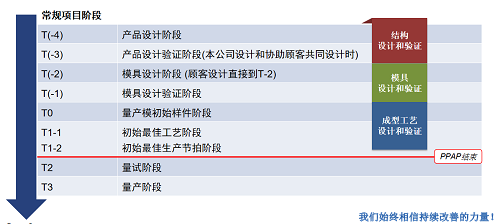
In the core stages of mold trial and pilot production, Zhengcun implements rigorous closed-loop management and relentless pursuit of perfection. In my previous job, mold trials were usually carried out in the production workshop, with design engineers only checking the results on site. There were no clear responsible persons or time limits for problem rectification. At Zhengcun, three progressive mold trials T0, T1 and T2 are arranged in sequence. Each trial is fully followed up by molding design engineers, with every defect recorded with clear cause analysis, rectification measures, responsible person and completion time to form a complete mold trial report. Take the silicone gasket project I was in charge of as an example: for the air bubbles and flash defects found in the T0 mold trial, we jointly formulated a rectification plan with the mold and production team on the same day, completed mold adjustment the next day, and thoroughly solved all problems in the T1 trial. The T2 small-batch pilot production simulated the actual mass production state to verify process stability and production capacity, ensuring every step is solidly implemented without rushing into mass production. Such rigorous dedication of never overlooking any detail and never skipping any milestone is the key to stable product quality and good customer reputation at Zhengcun.
Last article:Review the changes of the warehouse in recent years2026-04-23 22:23:48
Next article:Introduction to Zhengcun System Management2026-05-18 10:18:54