The core competitiveness of manufacturing lies in material flow speed. Inventory represents the largest cost, while turnover equals profit. Shortening the full-cycle duration of products from production launch to warehousing is a core lever for manufacturing workshops to break through capacity bottlenecks and cut operating costs.
Note: The "order closure rate" mentioned herein refers to the flow speed of each product from launch to warehousing.
Many manufacturing workshops have long-standing issues including waiting between processes, semi-finished product backlogs and delayed warehousing. Massive materials occupy floor space and capital, extending delivery lead times. To resolve this pain point, our factory has rolled out improvement solutions centered on full-process product flow optimization across three dimensions: production scheduling, inter-process collaboration and finished goods warehousing. We have systematically boosted on-site product turnover rate to deliver multiple benefits including cost reduction, faster throughput and improved quality.
1 Implementation Measures for Product Turnover Optimization
1.1 Train Timetable-Style Scheduling for Precise Production Planning
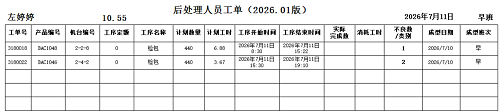
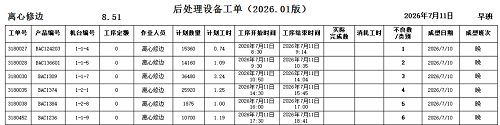
We have abandoned the traditional extensive mass production model and rolled out standardized timetable-based scheduling. Daily and hourly production tasks are refined according to order delivery deadlines, equipment capacity and staffing allocation, with manpower and machinery scheduled like a train timetable. Production resources are allocated on demand to eliminate process congestion caused by concentrated material feeding, balancing capacity load of each process from the source.
1.2 Pull-Driven Supervision to Remove Bottlenecks in Process Flow
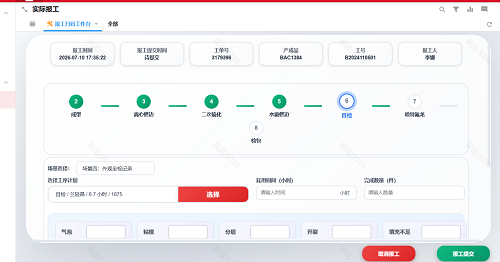
A downstream-pull-upstream production mode is adopted to eliminate advance stocking without actual demand. Process flow kanban boards are deployed; the Mingdao Cloud platform enables real-time viewing and supervision of each product’s movement path. Replenishment signals are triggered when materials for subsequent processes run short, and upstream processes produce only on demand. On-site managers track semi-finished product transfer progress via Mingdao Cloud, eliminating prolonged dwell time between processes and shortening semi-finished goods stagnation periods.
1.3 Strict Control Over Timely Warehousing to Avoid Cycle Delays in Final Stages
Formal timeliness standards for finished goods inspection and warehousing after production are formulated: sampling inspection and warehousing procedures must be completed within 2 hours after products come off the line. Dedicated transfer positions are assigned, and finished goods zones are placed adjacent to warehouse areas to minimize handling distances. Delayed warehousing products are reviewed daily, with root causes traced and corrective actions implemented to prevent finished goods from occupying workshop circulation space.
2 Outcome Verification
After phased improvement rollout, remarkable data changes have been recorded in the workshop:
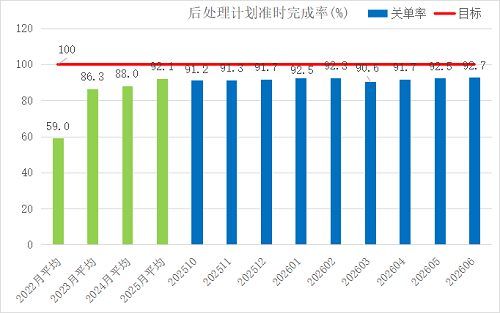
The overall product turnover rate (order closure rate) has risen from 59% to 92%, greatly alleviating floor space pressure and significantly cutting capital occupation costs for materials. The on-time order delivery rate has reached 99.8%. Disorganized production and material shortage downtime have been largely eliminated, with ineffective consumption of labor and equipment continuously reduced.
3 Conclusion
Improving product turnover rate is not a single-point renovation, but full-chain collaborative management covering scheduling, process operation and warehousing. Timetable-based scheduling balances production capacity, pull-driven production reduces inventory backlogs, and timely warehousing closes the process loop. These three measures complement each other to smooth the entire production circulation chain.
Moving forward, the workshop will further refine circulation standards, conduct regular reviews of turnover data, and continuously tap into potential for flow optimization. Efficient on-site material circulation will sustainably drive production cost reduction and efficiency gains, consolidating the enterprise’s core manufacturing advantages.