


Management of front-line employees
Release date:2026-01-23
The front-line workers in the manufacturing industry are the main force in production and the key carriers for ensuring production capacity and quality control. However, due to factors such as the skill levels of personnel and differences in work cognition, the management of the front-line teams always faces many challenges. If the management of the front-line staff is not good, the entire production team will fall apart, lacking morale. Production quality and production efficiency will be out of the question. On the contrary, if everyone has enthusiasm for work, is upright in attitude and proactive, the production will naturally be of high quality and efficiency. Here, I will share my practical experiences in managing the front-line staff from the following aspects.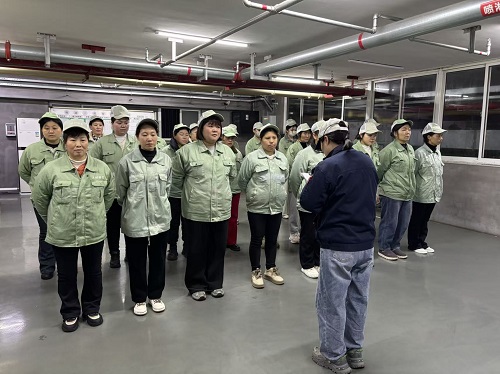
1. Precise personnel selection
Personnel selection is the prerequisite for achieving effective management. It involves a process of "screening - adaptation - confirmation".
1.1 Interview Screening
The production environments, operation standards and management systems of different enterprises vary, and the requirements for personnel also differ. First of all, during the interview process, strict screening is necessary. The most suitable candidates are the most important. As the head of the production department, this task requires personal involvement. Interview each employee and select the appropriate personnel based on the job requirements. Here, we mainly discuss soft indicators, such as the compatibility between the personnel and the position, and make preliminary identification through communication to find the employees you need.

1.2 On-site Work Adaptation Test
Conduct on-site work tests for those who meet the basic requirements. Gain a preliminary understanding of the working environment, scope of operations, and job content. Observe their suitability. Complete the recruitment based on mutual recognition, thereby reducing the risk of staff turnover at the source.
2 Onboarding Care
New employees are exposed to a new environment and a new position. A single training session is insufficient to ensure a smooth integration. Therefore, we adopt the "training + care" model.

2.1 Systematic Onboarding Training
The training specialist conducts targeted training on core contents such as company policies and job operation norms, helping new employees quickly acquire basic operational skills.

2.2 One-on-One Care Mechanism
A special onboarding care plan is formulated, and managers conduct one-on-one follow-ups with new employees to comprehensively understand their work adaptation, difficulties in work and life, and provide them with answers to questions and assistance. Through emotional connection and response to needs, new employees can quickly adapt to their new positions.
3. Continuous Monitoring and Cultivation
For employees who have officially started their positions, continuous attention is necessary. Based on each individual's learning ability, a reasonable workload should be assigned, and specific training plans should be formulated to gradually enhance job skills and achieve production targets. It is particularly important to note that each person should be treated individually rather than following a uniform pace. Everyone's acceptance and learning ability vary.
4. Implementation of the system
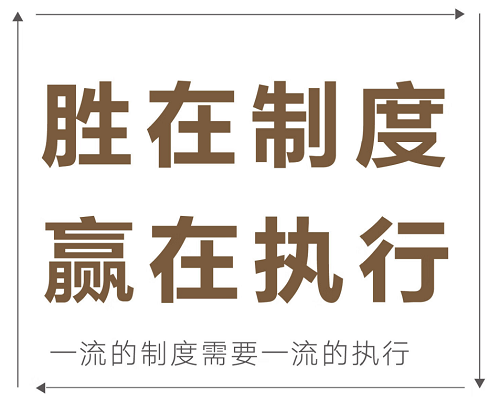
The company's policies can only be truly implemented at the grassroots level if they are effectively carried out. Only then can the policies be regarded as truly implemented. Why do many companies' policies fail to be implemented? The responsibility lies entirely with the management personnel. The company's policies must first be fully disseminated to all employees. Everyone needs to know each policy. The policies mentioned here include management systems, production discipline, operation requirements and norms, etc. The forms can be achieved through various trainings, meetings, and occasional, repeated learning sessions.
Just knowing the system is not enough. We need to help everyone understand it, understand why it is the way it is, and understand what is considered correct. Secondly, all management personnel need to set a good example by strictly adhering to the company's system and becoming role models for the front-line workers.
Finally, it is necessary to be able to stand in the position of the employees and help them solve problems and difficulties in their work. In this way, the employees will develop trust in you and their execution ability will significantly improve. Of course, in actual production activities, relying solely on these is not enough. Some form of rewards and punishments is also necessary. For those who perform well, rewards must be given; conversely, for those with serious misconduct and those who refuse to correct their behavior, appropriate penalties must be imposed to ensure a positive cycle among the personnel.
5 Motivation
Employee management cannot do without motivation. Motivation is the key to stimulating employees' intrinsic motivation. It should include both material incentives and spiritual encouragement. Comprehensive incentive subsidies and rewards for outstanding employees not only reflect fairness but also make employees see the value of their efforts. At the same time, a word of recognition and a public praise can also ignite their enthusiasm for work. Besides, we also have promotion channels, such as promotion to team leader or team supervisor, providing development opportunities for capable and contributing employees.
In conclusion, the management of frontline employees should adhere to the "people-oriented" principle, ensuring that every frontline employee feels respected and sees the hope for growth. When an enterprise shows care for its employees, the employees will take on their responsibilities, and ultimately achieve a win-win situation of "employee growth, team efficiency, and enterprise development".
Last article:Improvement of rubber internal mixing process2026-01-12 09:43:13
Next article:The way to implement the inspection departments duties2026-02-02 15:02:36